



class 8 trucks
forecasting


The latest economic data points to an economy that remains more resilient than many expected entering the middle of 2026. Labor market conditions strengthened again, job openings surged to their highest level in two years, and construction activity continues to be supported by massive investment in data center infrastructure.
For transportation professionals, these developments matter because they influence freight demand long before shipment volumes appear in transportation data. Employment growth supports consumer spending, construction activity drives industrial freight, and business investment creates downstream demand across manufacturing and supply chains.
The biggest economic story this week was another strong employment report.
The U.S. added 172,000 payroll jobs in May, while previously reported gains for March and April were revised upward by a combined 93,000 jobs. The unemployment rate remained steady at 4.3%.
Several sectors contributed meaningfully to growth:
The combination of strong monthly gains and upward revisions suggests the labor market remains on solid footing despite concerns about slowing economic growth earlier this year.

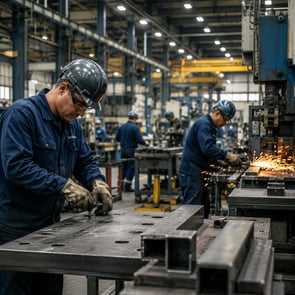 The labor market story extends beyond current hiring.
Job openings jumped 10.6% in April to 7.6 million positions, the highest level since May 2024. Openings were also up 7.3% year over year, marking the strongest annual comparison in nearly four years.
The largest increase in openings occurred within professional and business services, a category often associated with broader business expansion plans and future hiring activity.
The rise in available positions suggests employers remain confident enough to continue adding workers despite ongoing uncertainty surrounding interest rates and broader economic policy.
 While many areas of manufacturing construction have begun to cool, investment in data centers continues to accelerate.
Overall construction spending increased 0.4% in April, led by residential activity. Within nonresidential construction, data centers remain one of the fastest-growing categories.
Key developments include:
At the same time, spending on manufacturing facilities declined as several federally supported semiconductor and computer-related projects move beyond peak construction phases.
The contrast highlights a changing investment landscape where AI, cloud computing, and digital infrastructure continue to attract significant capital spending.
Housing remains an important economic indicator heading into the second half of the year.
Mortgage rates moved lower during the latest week, with the average 30-year fixed-rate mortgage falling to 6.48%.
Although rates remain elevated by historical standards, the recent decline offers some relief to prospective homebuyers and builders. Any sustained movement lower could help support residential construction activity in the months ahead.
Fuel markets delivered some welcome relief during the latest week.
 The national average diesel price fell 17.3 cents per gallon, reaching its lowest level since mid-March. However, diesel prices remain substantially above levels seen before the sharp increase earlier this year.
Meanwhile, crude oil prices have remained relatively stable, trading primarily between $92 and $96 per barrel. Distillate inventories recovered slightly in the latest reporting period but remain near historically low levels.
The combination of elevated crude prices and tight fuel inventories suggests that energy markets remain vulnerable to future volatility.
Economic indicators released this week continue to paint a picture of an economy that remains remarkably resilient. Employment growth remains healthy, businesses are posting more job openings, and investment in data center infrastructure continues to expand at a rapid pace.
At the same time, lower mortgage rates could provide support for housing activity, while energy markets remain an area to watch closely as the second half of 2026 unfolds.
Taken together, the latest data suggests that the economic foundations supporting freight demand remain intact, even as certain sectors continue to navigate higher costs and evolving market conditions.