



class 8 trucks
forecasting


Economic growth, freight markets, and energy prices sent mixed but meaningful signals this week. While the U.S. economy continues to expand at a steady pace, the drivers of growth—and the pressures facing transportation markets—are shifting in ways freight decision-makers should watch closely.
Below are the most important takeaways shaping the current freight and transportation outlook.
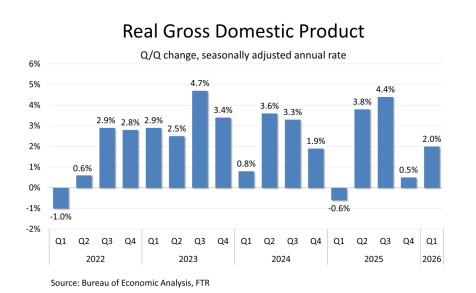
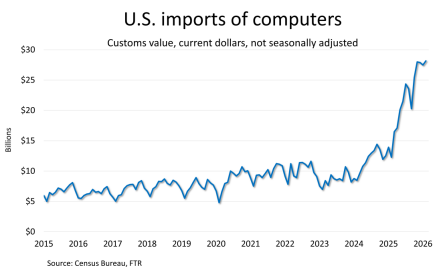
The U.S. economy grew at a 2.0% annualized rate in Q1, supported primarily by investment and exports, not consumer goods spending. A major contributor was computer-related investment, reflecting continued momentum from artificial intelligence and technology adoption.
However, strong imports significantly offset GDP growth, highlighting ongoing trade imbalances and their impact on domestic production and freight flows. Consumer spending growth came almost entirely from services, while goods spending remained essentially flat.
The ISM Manufacturing Index held steady at 52.7 in April, marking the fourth consecutive month in expansion territory. New orders improved slightly, production eased, and backlog growth slowed.
The most notable pressure point was prices, which surged sharply month over month, signaling rising cost inputs for manufacturers and shippers alike.

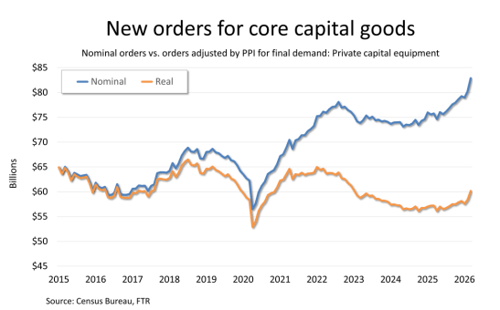
New orders for core capital goods jumped 3.3% month over month, the strongest increase since mid-2020. Computer and related products were the standout, with orders up 15% year over year—the strongest growth in nearly two decades.
 Real consumer spending rose modestly, driven primarily by motor vehicle purchases. Inflation-adjusted spending on vehicles jumped again in March, while broader goods spending showed only limited growth.
At the same time, gasoline prices were the primary driver of consumer inflation, pushing the PCE price index to its largest monthly increase since mid-2022.
Excluding autos, retail inventories fell to their leanest level since June 2021. Inventory-to-sales ratios are now near historic lows, suggesting restocking demand could emerge later in the year if sales stabilize.
Housing starts jumped sharply in March, reaching their highest level since late 2024. Both single-family and multi-family construction contributed to the gain.
However, building permits declined, signaling caution about future construction activity. Mortgage rates also ticked higher, potentially weighing on housing momentum.
 Diesel prices declined for a third straight week, but crude oil prices surged amid ongoing geopolitical uncertainty involving Iran. Despite recent easing, diesel prices remain significantly higher than earlier this year.
Total broker-posted truck spot rates reached an all-time high, even as dry van rates eased slightly. The record reflects a shift in freight mix, with higher-priced flatbed and refrigerated volumes gaining share.

Union Pacific and Norfolk Southern refiled their merger application with updated diversion estimates, projecting increased truck-to-rail shifts. Meanwhile, intermodal traffic rose year over year, offsetting declines in some carload categories.
This week’s data reinforces a familiar theme: freight markets are being driven more by investment, technology, and supply-side factors than by traditional consumer demand. At the same time, fuel volatility, tight inventories, and evolving modal dynamics continue to add complexity to freight planning.
Staying ahead will require close attention not just to volumes and rates—but to what’s driving them.