


class 8 trucks
forecasting


After a brief hiatus, the latest episode of FTR’s Rail & Intermodal Update is packed with meaningful developments for rail shippers, equipment owners, and transportation planners. Host Joseph Towers returns with analysis on new tariff policy, recent rail traffic performance, and an initial look at the resubmitted UPNS merger application.
.png?width=1080&height=1080&name=11%20Podcast%20Graphics%20-%20Updated%205.28.24(1).png)
Here’s a breakdown of the key topics and why they matter.
 One of the most impactful updates discussed in this episode is the Trump administration’s recent changes to Section 232 tariffs on metal products — specifically as they relate to rail equipment.
For the first time, tank cars imported into the U.S. from Canada and Mexico are now subject to a 25% tariff based on the finished value of the car. Previously, most freight cars were considered USMCA-compliant and entered tariff-free.
This change is significant for several reasons:
More detailed analysis will be available in FTR’s upcoming subscription Q2 Rail Equipment Outlook.
Turning to recent rail traffic data, North American carload volumes have shown continued strength over the past four weeks, up 2.8% year over year, despite a slight pullback in the most recent week.
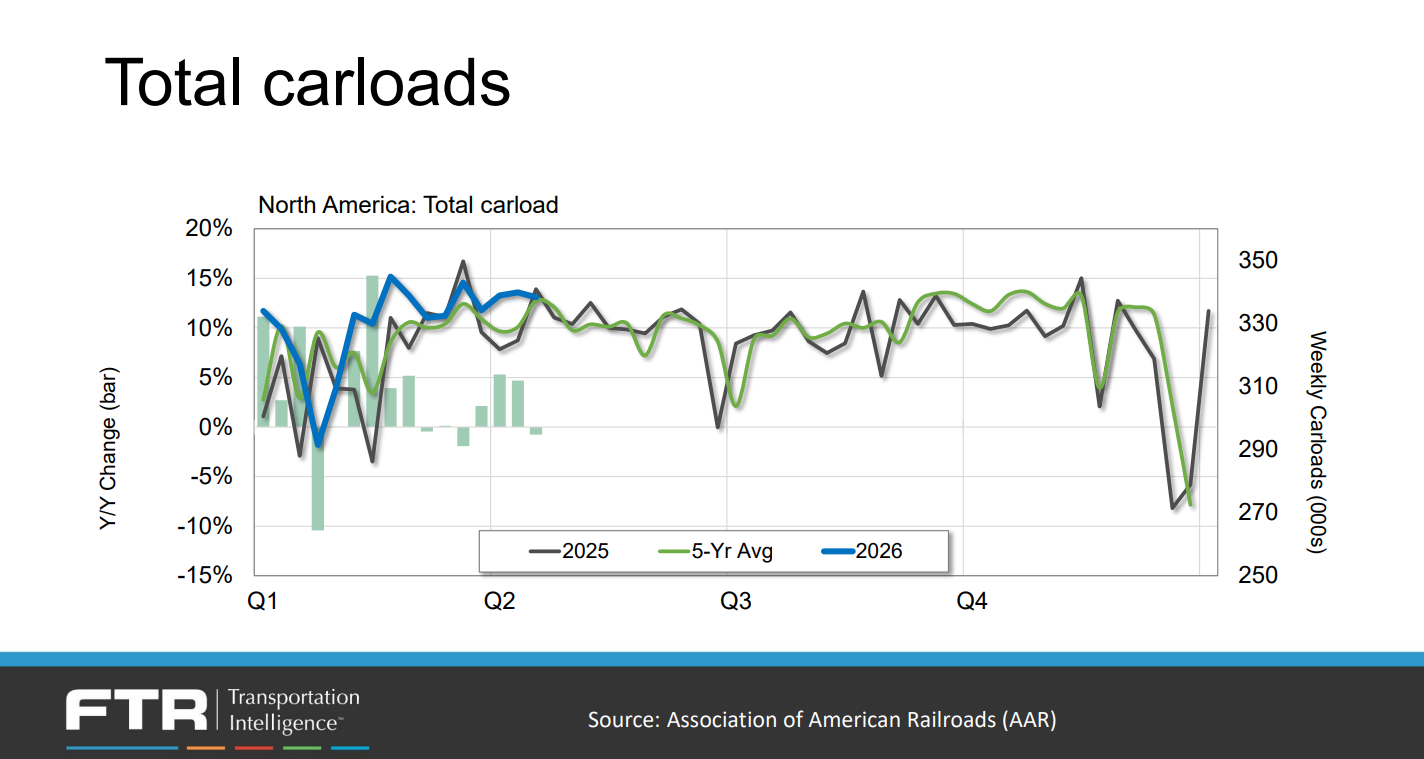
Key highlights include:
On the downside, coal and the “all other” category remain the only major commodity groups posting year-over-year declines.
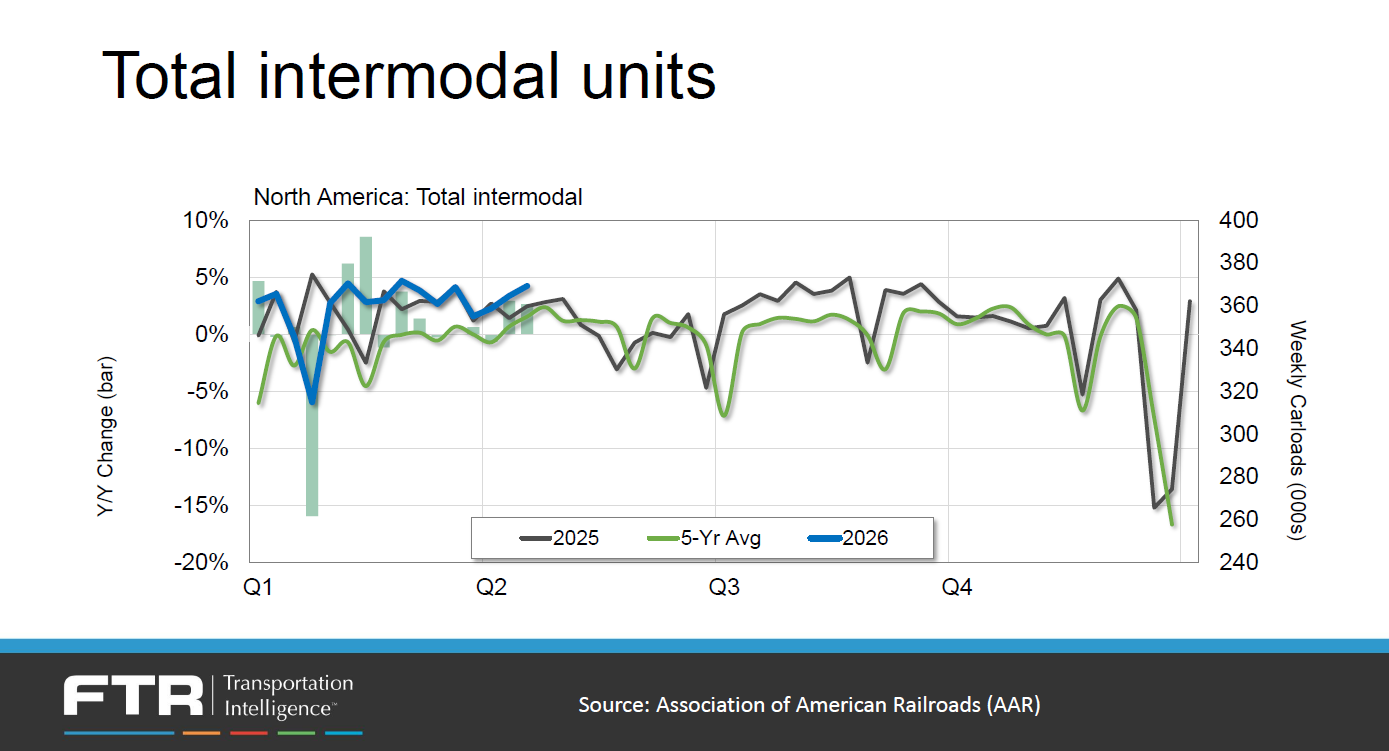
Intermodal traffic has also posted year-over-year gains, averaging 1.4% growth over the past four weeks, though performance varies by region:
Despite revisions, Mexico remains a clear bright spot in intermodal activity so far this year.
The episode concludes with an early, high-level look at the resubmitted UPNS merger application, which was filed just hours before recording.
One notable change from the original December submission is an increase in projected truck-to-rail diversions, now estimated at 2.136 million truckloads, up roughly 100,000 from the prior estimate. This adjustment stems from changes in data sources and methodology.
The revised filing also includes additional market share projections, as requested by the Surface Transportation Board (STB). While those projections are not yet clearly visible in publicly available materials, further insight is expected as supporting workpapers become available.
The STB has 30 days to accept or reject the application as complete, with industry comments on completeness due by May 8.
This episode underscores how quickly policy changes, market data, and regulatory decisions can reshape the rail landscape. From tariffs influencing equipment economics to evolving traffic trends and merger scrutiny, the implications for shippers and rail stakeholders are substantial.
For deeper insight into any of these topics — or questions related to freight, rail economics, or equipment — listeners are encouraged to reach out directly to the FTR team.
🎧 Listen to the full Rail & Intermodal Update episode for complete analysis and context.