

class 8 trucks
forecasting


The latest episode of FTR’s Trucking Market Update podcast highlighted what might be a meaningful shift in the for-hire trucking landscape, but, alternatively, it could be just a blip. The exits of trucking firms accelerated notably in December. While calendar effects accounted for some of the increase, challenges facing small carriers might have played a role.
Revocations of operating authority net of reinstatements in December totaled reached 6,427 – the highest monthly total since April 2024.The average for 2025 was just under 5,000 a month, and the December total exceeded the 2024 average, too.
The calendar figures significantly into monthly totals because of the Federal Motor Carrier Safety Administration’s workflow. In any given week, the agency processes most of its revocations on Mondays, so months with a fifth Monday are essentially guaranteed to exceed the normal level of revocations. December had five Mondays as did June and September last year. Those months recorded the three highest levels of revocations net of reinstatement during 2005.
However, the calendar does not explain everything. December’s net revocation total was more than 800 higher than September and more than 900 higher than June. Those aren’t huge differences, but they are notable and suggest challenges that did not exist before December.
Meanwhile, new carrier authorizations remained subdued. Only 4,140 new for-hire firms entered the market in December, one of the weakest totals of the past year. The combination pushed the net carrier count down by 2,287 in a single month – the largest decline since January 2024.
The podcast discussed two possible factors that might have triggered an uptick in revocations.
If insurance premiums were a factor, they likely will yield elevated revocations in January as well. As for pressure on foreign drivers, that’s hard to assess in real time. However, one dataset that we can track is carriers that have drivers placed out of service (OOS) for ELP violations, and the figures do not suggest that poor English skills was a substantial factor.
According to FTR’s analysis, of the more than 6,400 revocations net of reinstatement, just 185 had incurred an OOS violation for ELP. Moreover, due to a relatively large number of drivers and relatively small number of OOS violations, many of those revocations probably were coincidental– i.e., the carrier would have shut down anyway; it just happened to have one or more drivers with OOS violations.
On the other hand, 76 carriers with authority revoked in December and at least one OOS violation reported having just one driver. The likelihood of a connection between ELP enforcement and carrier exit is much stronger in those cases, of course.
Looking beyond December, fourth-quarter data show that revocations net of reinstatements were the highest since Q3 2024, while new carrier entry slowed materially from mid-year levels. For all of 2025, new carrier formation was essentially flat versus 2024 but exits remained historically elevated – well above pre-2022 norms.
Despite the recent pullback, the shift in trucking capacity to more but smaller carriers remains solidly intact. The U.S. still has nearly 86,000 (33.4%) more active for-hire trucking firms than it did before the pandemic. That doesn’t mean capacity is elevated, however. Payroll employment figures, which generally do not reflect the huge number of very small carriers, indicate a very sharp decline in truckload capacity since mid-2023.
Carrier population trends do not necessarily tell us what is happening with overall trucking capacity, but they do inform us on how small carriers in particular are experiencing the market. December figures in isolation give us only a snapshot, and they deviate from the overall 2025 experience of a static carrier population.
December revocations, therefore, represent a reminder to “stay tuned” to a possible change in the market, but one month is otherwise not that meaningful. Given the recent strength in spot rates and decline in diesel prices – both also discussed in the January 5 podcast – there is reason to suspect that December was a blip.
Also, it’s important to realize that it takes at least a month – and in practice, probably a couple of months or more – to revoke a carrier’s operating authority. That means that the strength in spot rates and downturn in diesel prices that occurred in December were not a factor in December revocations. If spot rates and diesel prices continue to be favorable into 2026, that could lead to increased carrier creation on a net basis and put even more pressure on the active capacity of larger carriers.
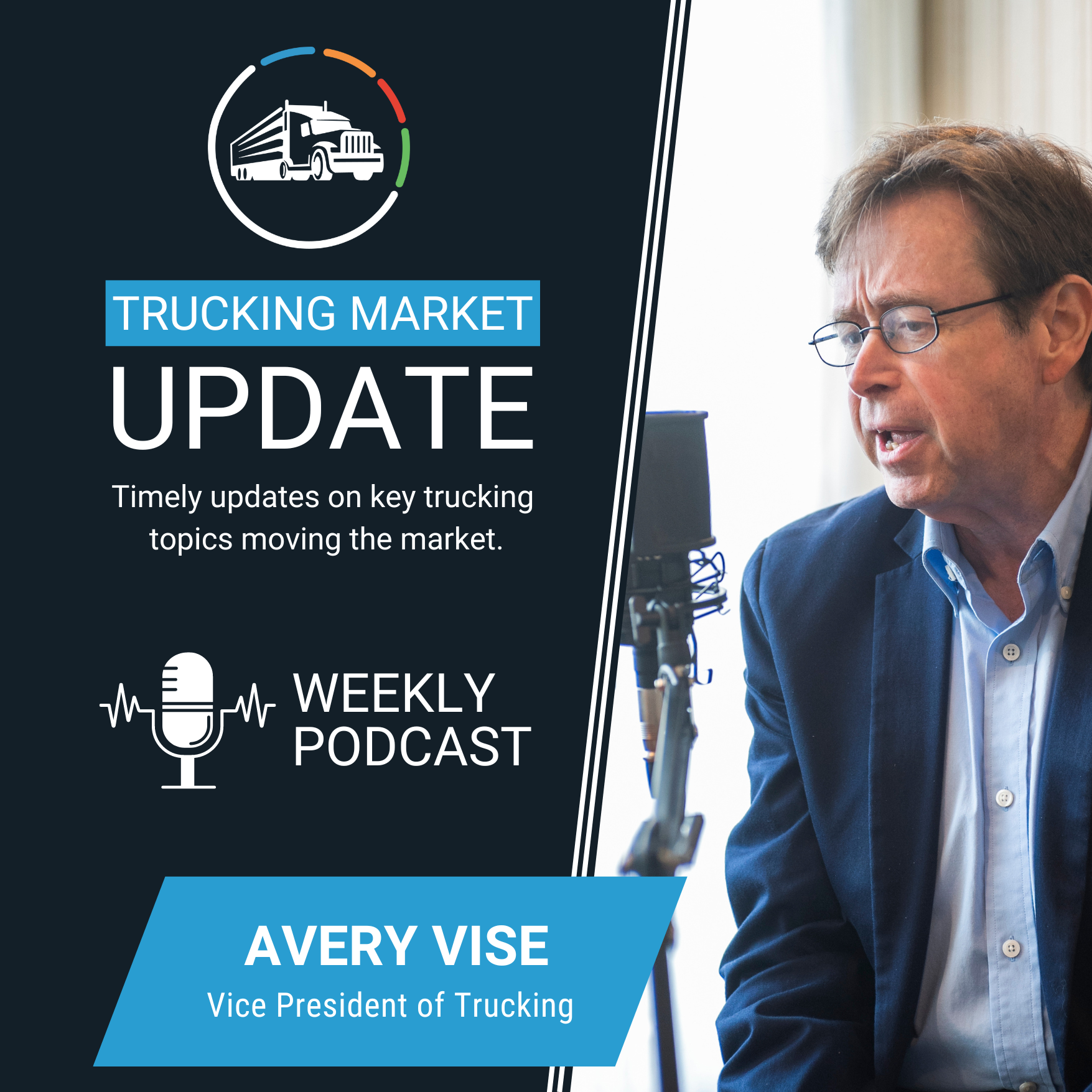
This analysis is based on discussion from FTR’s Trucking Market Update podcast, Episode 346, hosted by Avery Vise.
Want to track trucking employment, spot markets and economic trends as they evolve?
FTR’s Trucking Update and Truck & Trailer Outlook provide ongoing insight into labor dynamics alongside freight demand, rates, and equipment utilization—helping market participants assess both near-term conditions and longer-term risks. Click on either image below to learn how these products can help your bottom line in 2026.