
class 8 trucks
forecasting


This week’s Trucking Market Update highlights a market that’s shifting quickly across fuel, rates, and the broader economy. If you’re making transportation decisions right now, the key theme is volatility—especially on the cost side—paired with early signs of tightening conditions in parts of the spot market.
1. Fuel Costs Are Surging Again
Diesel prices jumped another 30 cents in the latest week, pushing the national average above $5.37/gallon and marking one of the fastest multi-week increases on record.
What this means for you: Cost pressure is building quickly, and recovery mechanisms (especially in spot) are becoming more critical.
2. Spot Rates Are Responding—But Not Uniformly
The spot market is showing strength, particularly in temperature-controlled and flatbed freight:
What this means for you: The market is not moving uniformly—mode and geography matter more than ever.

3. Load Volumes Are Climbing
Total load activity increased again and is now at its highest level since June 2022.
What this means for you: Demand signals are improving, but cost pressures are rising alongside them.
4. The Macro Environment Is Sending Mixed Signals Several economic indicators point to underlying instability:
What this means for you: Demand softness and inflationary pressure are coexisting—creating a complex planning environment.
5. Policy Developments Could Impact Capacity
New legislation targeting driver qualifications (including English language enforcement) could tighten labor availability depending on implementation.
What this means for you: Regulatory shifts may become a secondary driver of capacity constraints—not just market dynamics.
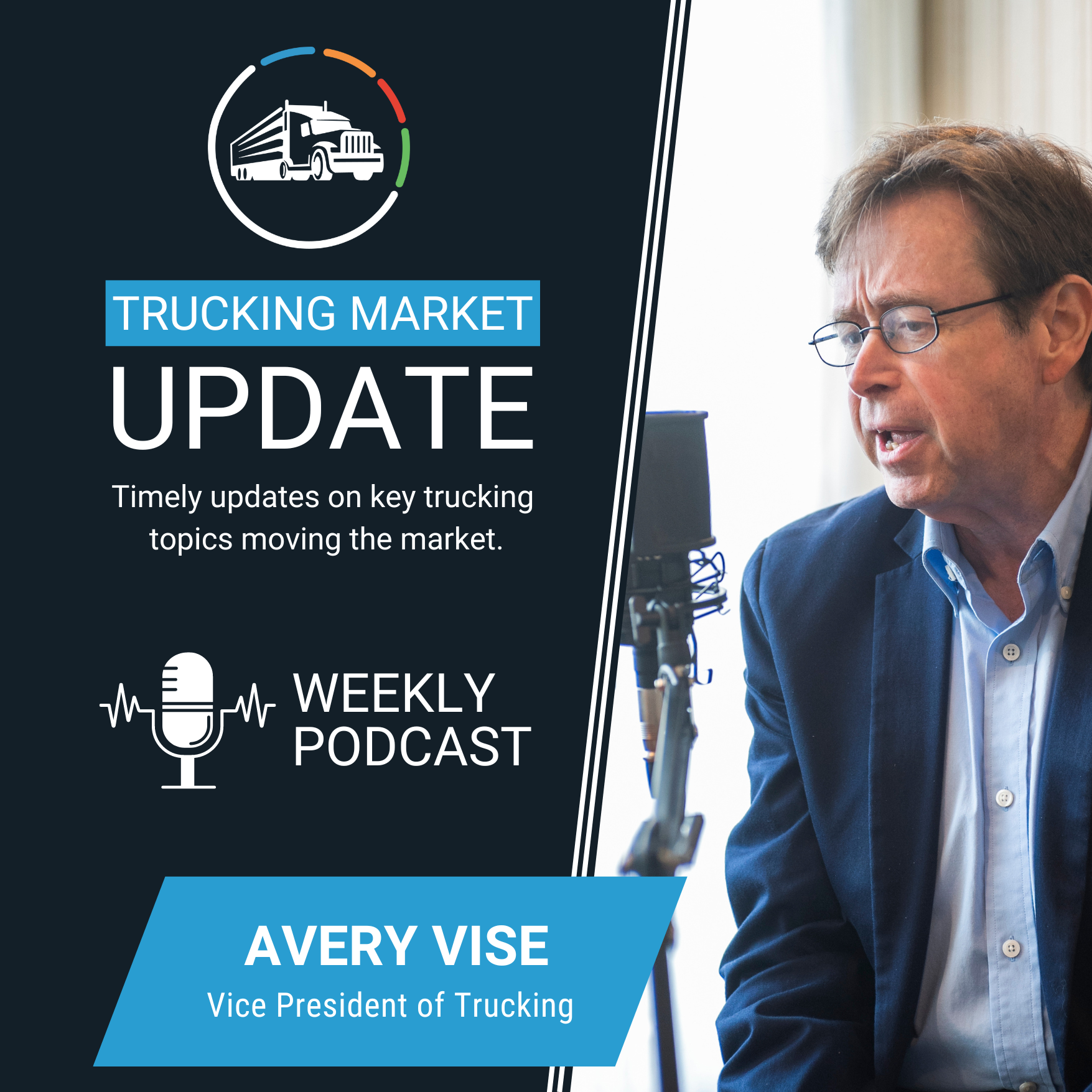
This is just a snapshot. The full podcast breaks down the data, regional nuances, and forward-looking implications in detail.
.jpg?width=356&height=356&name=2026%20FTR%20Conference_SM_Trucking%20Market%20Insight(1).jpg)
Trucking leaders — mark your calendars.
The Truck Track at the 2026 FTR Transportation Conference returns!
📅 August 31 – September 1, 2026
📍 Indianapolis, IN
REGISTRATION OPENS APRIL1, 2026!
Sign up here to stay in the loop.