.png?width=1200&length=1200&name=11%20Podcast%20Graphics%20-%20Updated%205.28.24(2).png)


class 8 trucks
forecasting


 After months of cautious sentiment across the commercial vehicle market, April delivered another constructive signal for the U.S. trailer industry. According to the latest data from FTR, trailer net orders rose to 19,953 units in April, extending March’s upside momentum instead of following the more typical seasonal slowdown.
The result marked:
For a market that spent much of the last year dealing with weak freight fundamentals, excess capacity, and cautious fleet spending, the latest order activity suggests conditions may finally be shifting toward a more stable footing.
While the improvement is notable, the current environment still appears selective rather than broad-based. Fleets remain disciplined, and much of the activity continues to center around replacement cycles instead of aggressive expansion.
According to Dan Moyer, senior analyst, commercial vehicles at FTR:
“Overall, the U.S. trailer market appears to be moving from deterioration toward stabilization and modest improvement.”
FTR noted that stronger fleets, normalization in dry van demand, and aging equipment replacement remain the primary drivers behind recent order strength. Trailer demand is still expected to lag the Class 8 market in the near term as carriers continue managing utilization levels and margin pressure.
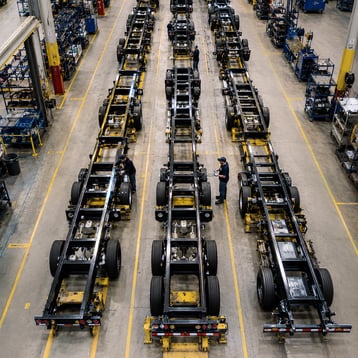 Manufacturing activity also reflected a market that is improving cautiously rather than overheating.
U.S. trailer builds in April were essentially flat month over month at 17,576 units and were only slightly higher year over year. Calendar year-to-date production has also remained relatively stable, signaling that OEMs continue to manage output carefully despite improving order activity.
That production discipline could become increasingly important if demand continues recovering gradually through the second half of the year.
Even with improving demand trends, uncertainty remains elevated across the trailer market.
FTR highlighted several ongoing risks that continue to influence purchasing decisions, including:
These factors are creating an environment where fleets may remain hesitant to accelerate purchases until visibility improves further.
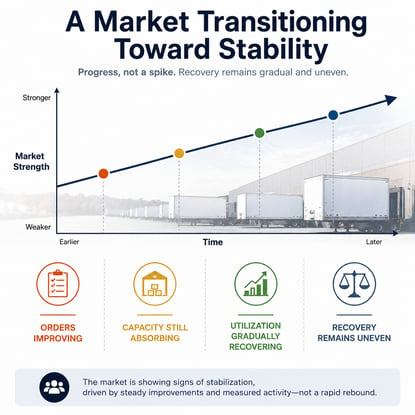 April’s order performance adds another data point suggesting the trailer market may be transitioning away from the sharp deterioration experienced over the last year. However, the recovery still appears uneven and dependent on replacement demand, utilization improvements, and continued absorption of excess capacity.
As fleets navigate changing freight conditions, tariff uncertainty, and evolving equipment economics, the pace and durability of the next trailer cycle will remain closely watched across the industry.
To view the chart accompanying this release, visit:
https://www.ftrintel.com/trailer-orders
Looking for a clearer view of where the equipment market is headed?
 FTR’s Truck & Trailer Outlook report helps industry participants track the trends shaping trailer demand, equipment production, and the broader commercial vehicle market. With forward-looking analysis and expert insight, it is designed to help you plan more confidently in a market still facing cost pressure, policy risk, and uneven demand.
Learn more about Truck & Trailer Outlook and how FTR can support your planning.