



class 8 trucks
forecasting
.png?width=1600&height=500&name=RMU%20March%2020%2026%20blog%20%20(1).png)

From armed conflicts to port activity and weekly rail volumes, the same truth holds: macro headlines and transportation demand are very different things
With disruptions in the Persian Gulf and crude pricing climbing above $100 per barrel as a result, one might come to the conclusion that higher prices should drive more U.S. production and, in turn, more crude-by-rail.
But history pushes back on that assumption.
Looking at prior energy shocks—like the Russia-Ukraine war—higher prices did not meaningfully accelerate U.S. production beyond its existing trajectory. Further, much of the growth in domestic production continues to come from regions like the Permian Basin, where rail plays a limited role in transportation.
Bottom line:
Shocks to oil pricing, especially temporary ones, likely won't translate into increases in rail volumes.
.png?width=1080&height=1080&name=11%20Podcast%20Graphics%20-%20Updated%205.28.24(1).png)
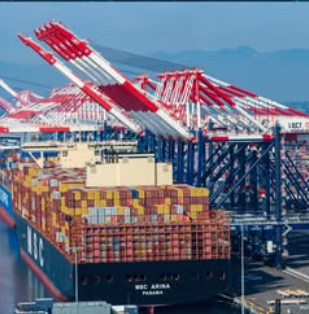 February data from the Port of Los Angeles showed:
At first glance, that’s a positive signal. But context matters.
Much of this activity appears tied to pull-forward demand ahead of Lunar New Year, not necessarily a sustained shift in underlying consumption.
This distinction becomes important when connecting port activity to intermodal trends.
Rail intermodal volumes posted another week of year-over-year growth (+1.7%), supported by both U.S. and Mexican carriers.
However, the details tell a more nuanced story:
Especially for U.S. carriers, y/y comparisons are being distorted by prior-year pull-forward activity, particularly for Union Pacific.
Translation: growth is there—but it’s not broad-based or evenly distributed.
After several weeks of gains, total carloads declined 0.8% year-over-year.
Performance by commodity continues to vary greatly:
The mix reinforces what we’ve seen throughout early 2026: strength in selective sectors, offset by structural weakness elsewhere.
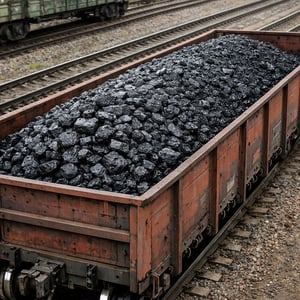 Our official position remains that year over year declines in coal will resume, beginning this year and continuing into the future—but recent performance raises an interesting question. Is the narrative of "secular declines" as obvious as it used to be?
While still below historical averages, coal volumes this year have generally outperformed 2025 levels. Additionally, with surging domestic energy demand, more attention has been given to coal as a tool to help alleviate some of the pressure on the grid.
This isn't to suggest that coal will soon become a major driver of rail traffic growth—but it may suggest that the standard narrative may not be as linear as previously assumed.
Across all of these data points, one theme stands out:
Rail markets are being shaped by structural dynamics—not just headlines.
For decision-makers, the implication is straightforward: You can’t rely on surface-level signals. You need to understand how the system actually works.
This is just a high-level view. FTR’s Rail Update subscribers receive deeper analysis on the drivers behind these trends—including commodity-level forecasts and forward-looking indicators.
For deeper analysis and ongoing updates, listen to the full episode of FTR’s Rail and Intermodal Update or contact Joseph Towers directly at jtowers@ftrintel.com.
👉 www.ftrintel.com/rail-podcast